




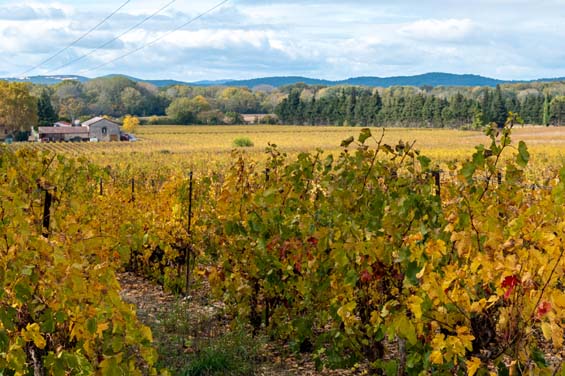
A CLIMATE CONDUCIVE TO VINE-GROWING
Le Vignoble des Cévennes se situe dans le Sud de la France, à proximité de son éponyme la chaîne montagneuse des Cévennes. Cette position géographique confère de nombreux avantages à la culture du vin : elle bénéficie du vent du nord et d’importantes amplitudes thermiques, ce territoire contribue grandement à la qualité et à la maturation des raisins !
Ce climat permet l’élaboration de 3 types de vins avec des caractéristiques singulières. Les vins rouges allient puissance aromatique et raffinement, les vins blancs et rosés quant à eux sont synonymes de douceur et de fraîcheur, très appréciés lors des fortes chaleurs estivales !
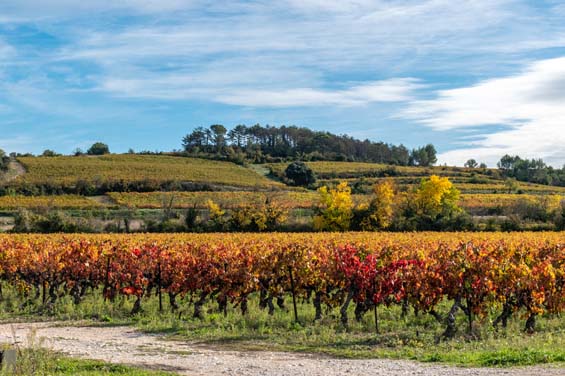
THE CEVENNES TERROIR: A CONSTELLATION OF COLORS
Les vignes sont présentes sur 4 types de sols : schistes, argilo-calcaires, acide et sur la plaine alluviale du Piémont.
Les sols schistes sont composés de roche généralement de couleur marron dont les tons peuvent varier du vert au rouge, offrant ainsi une magnifique mosaïque de couleurs !
Les sols argilo-calcaires contiennent aussi bien des minéraux, que de l’argile ou des matières organiques et sont très appréciés des vignerons.
Clay-limestone soils easily retain rainwater and heat!
Alluvial soils originate from river floods or strong torrents that have deposited various sediments. As a result, they are rich and ideal for growing vines.
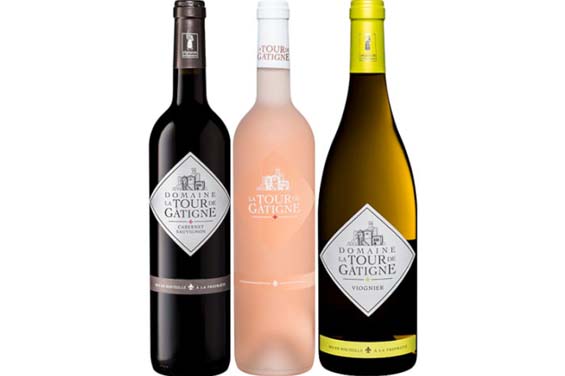
THE DIFFERENT GRAPE VARIETIES: AGE-OLD KNOW-HOW
L’amplitude des températures, la pluviométrie intense et irrégulière de cette zone donnent aux cépages une intensité aromatique et une vivacité notamment pour les cépages noirs dont la maturation est pratiquée en fût de chêne (merlot, cabernet-sauvignon, grenache et cinsault). Les cépages blancs sont traditionnellement le grenache et la clairette, qui se sont vite enrichis avec des cépages nouveaux comme le sauvignon, viognier et chardonnay.
PROHIBITED GRAPE VARIETIES
Ce sont des plants américains très robustes arrivés en France au XIXe : le clinton, l’isabelle, le noah, othello, jacquez et herbemont. Ils ne font pas partis de l’IGP Cévennes puisqu’ils ont été interdits bien que cultivés encore sur des parcelles privées pour un usage domestique.
Key figures
-

60 Private cellars
-

20 Cooperative wineries
-
80,000 Hectolitres
-

80% of sales are local
L’indication Géographique Protégée (IGP) se réfère à un produit agricole dont les caractéristiques, la qualité ou la réputation sont liées au lieu géographique dans lequel il est produit ou bien transformé. En ce qui concerne le secteur viticole, les étapes allant de la récolte du raisin à la création du vin doivent être élaborées dans la zone géographique définie.
Avoir choisi l’Indication Géographique Protégée n’est pas dû au hasard ! l’IGP est parfait pour l’activité viticole des Cévennes. Les vins doivent répondre à de nombreux critères et suivre des procédures de contrôle réalisées par un organisme indépendant agréé par l’Institut National de l’Origine et de la Qualité.
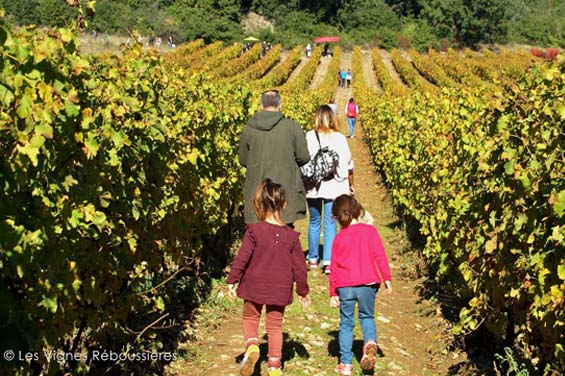
AN AREA RICH IN DISCOVERIES!
Au fil des années le territoire a connu un véritable développement de son économie touristique ! L’offre œnotouristique du territoire est devenue plus variée ce qui a valu à l’offre touristique de la destination d’être labellisée Vignobles et Découvertes en 2017.
Tout au long de l’année, le vignoble des Cévennes organise de nombreux événements oenotouristiques afin de promouvoir et valoriser leur territoire et leur patrimoine.