


Saint-Dionisy
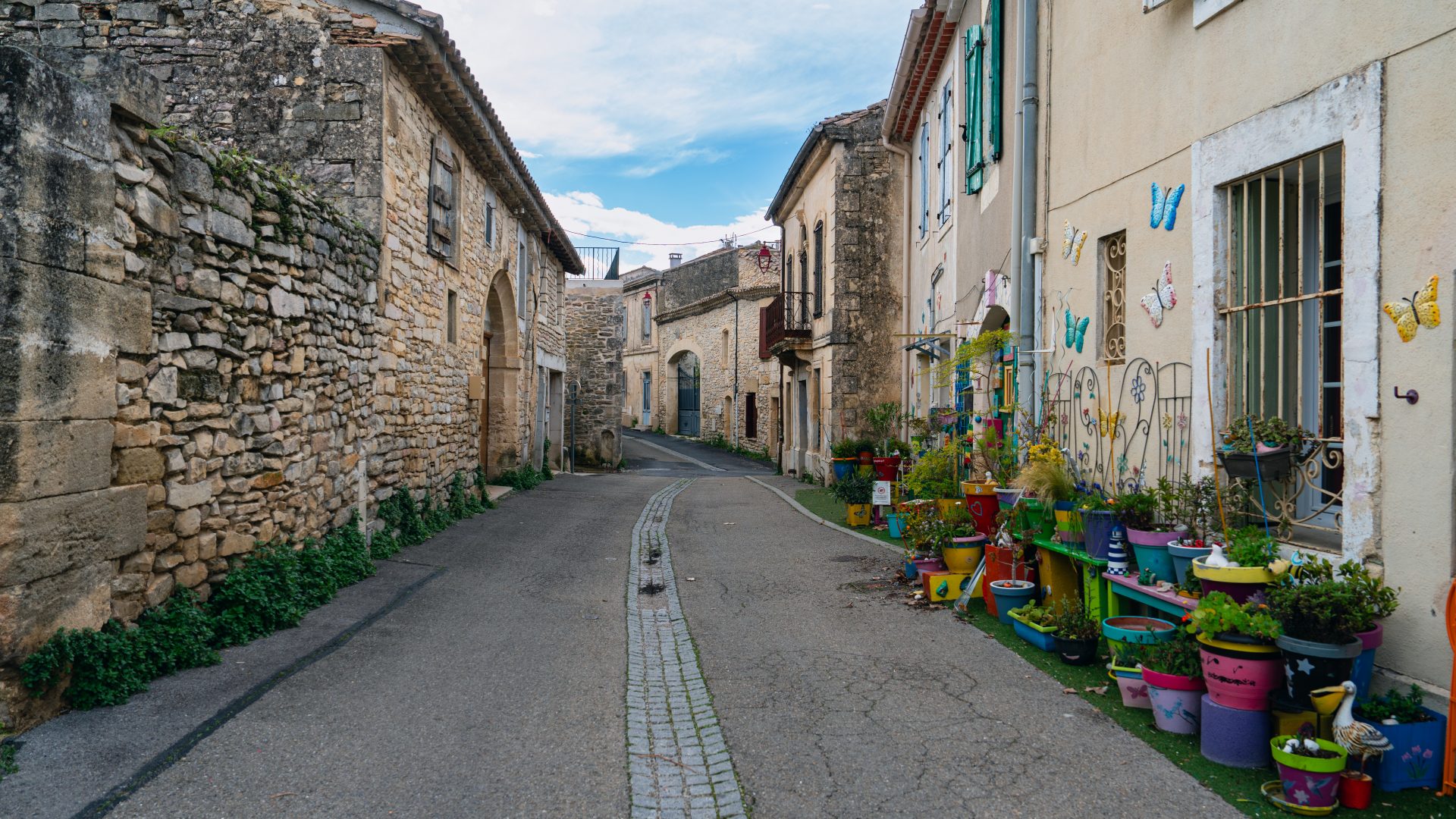
Located in the heart of the Vaunage region, to the west of Nîmes, the commune of Saint-Dionisy combines agriculture and tertiary services. The valley, watered by the Rhony river, stretches between Nîmes and Sommières, bordered by small mountains that were the cradle of the region's first inhabitants.
History & Heritage
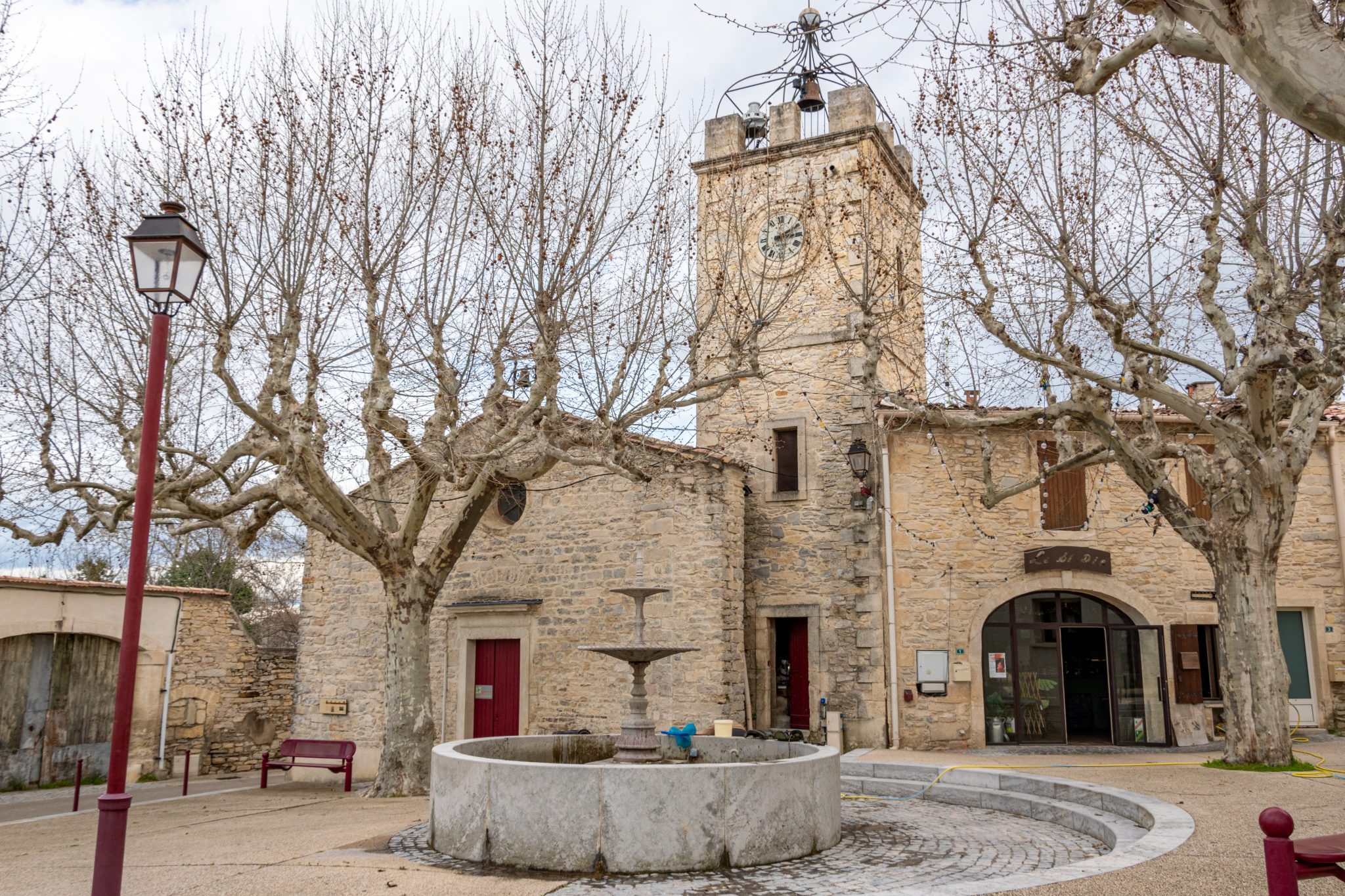
The first inhabitants of Saint-Dionisy settled on oppida, fortified sites. One of these oppida, La Roque de Viou, at an altitude of 187 meters, served as a lookout and defense point. During Roman colonization, the inhabitants left their oppidum to build their houses on the plain, around the fountain and the church.
The village was first mentioned in 1156 in a papal bull issued by Pope Adrian IV, under the name "San Dionysien". In 1305, King Philippe IV le Bel gave the rents of Saint-Dionisy to his minister Guillaume de Nogaret. In the 17th century, Saint-Dionisy belonged to the Marquisate of Calvisson until the French Revolution.
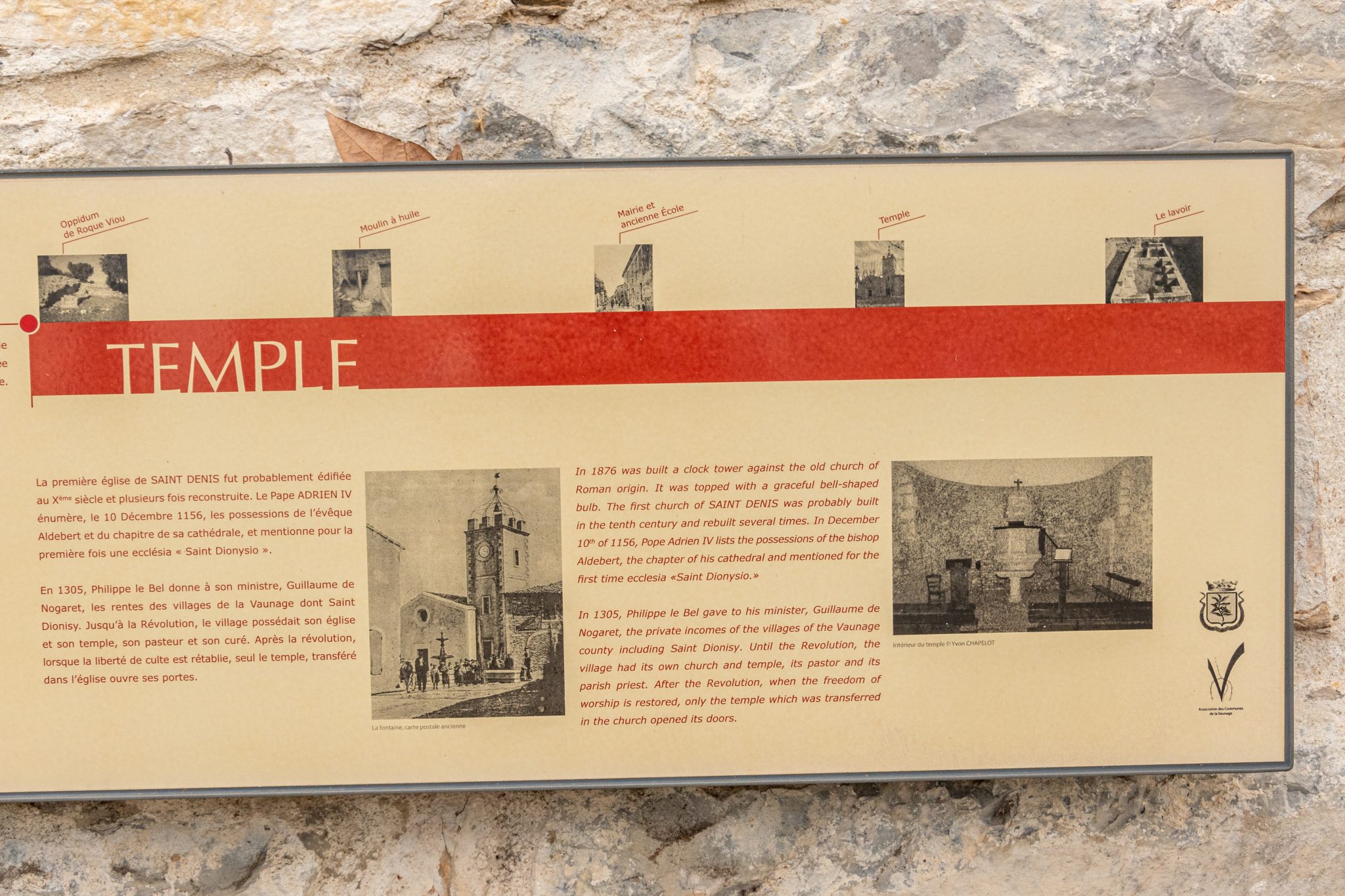
Church
Built in the 10th century, it was rebuilt several times. The Reformation of the 16th century brought religious conflicts between Catholics and Protestants. After the Revolution, only the Protestant temple remained in use, indicating the predominance of Protestantism in the village.
The 19th century saw a number of achievements:
1821: Construction of a windmill.
1823: Installation of the fountain.
1835: Construction of the washhouse.
1873: Construction of the clock tower.
1876: Creation of the school.
Saint-Dionisy is a village that combines historical tradition with rural development. Its privileged location and heritage make it an attractive place to visit.