


Clarensac
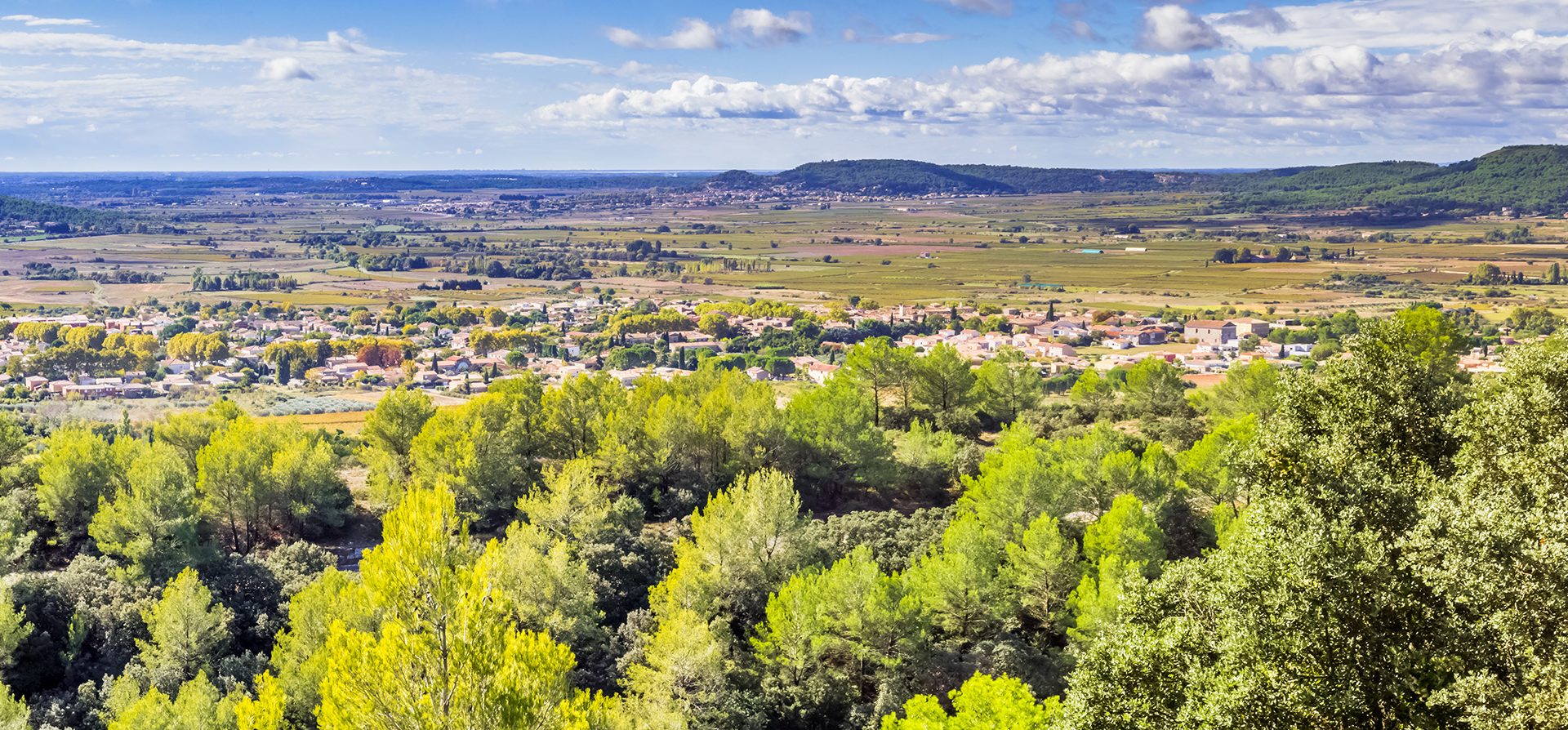
Located near Nîmes, the village of Clarensac boasts a rich historical heritage. Formerly known as "Clarentiacum" in 1027 and "Clarensiago" in 1104, Clarensac has survived the centuries with many testimonies to its past.
History
Clarensac first appears in official documents as "Clarentiacum" in 843, when Dalila, governor of Septimania, offered land to the Abbey of Psalmody. Over the centuries, the village came under the rule of the Counts of Toulouse, then the Counts of Nîmes and various local lords.
Clarensac once had three churches: Saint-André, Saint-Etienne-d'Alvernes and Saint-Romans. The village was fortified with several towers and a castle. The old village gates are still visible today.
In the 14th century, Clarensac was spared the Hundred Years' War, but suffered from looting and the Black Death. The Religious War in the 16th century saw fierce fighting between Protestants and Catholics. The village was invaded in 1628, resulting in many casualties.
During the French Revolution, Clarensac had its own communal militia. The 19th century saw the construction of a church in 1830 and the growth of the agricultural commune. The cooperative cellar was built in 1925, followed by the Chasselas producers' cooperatives in 1937.
Clarensac's heritage
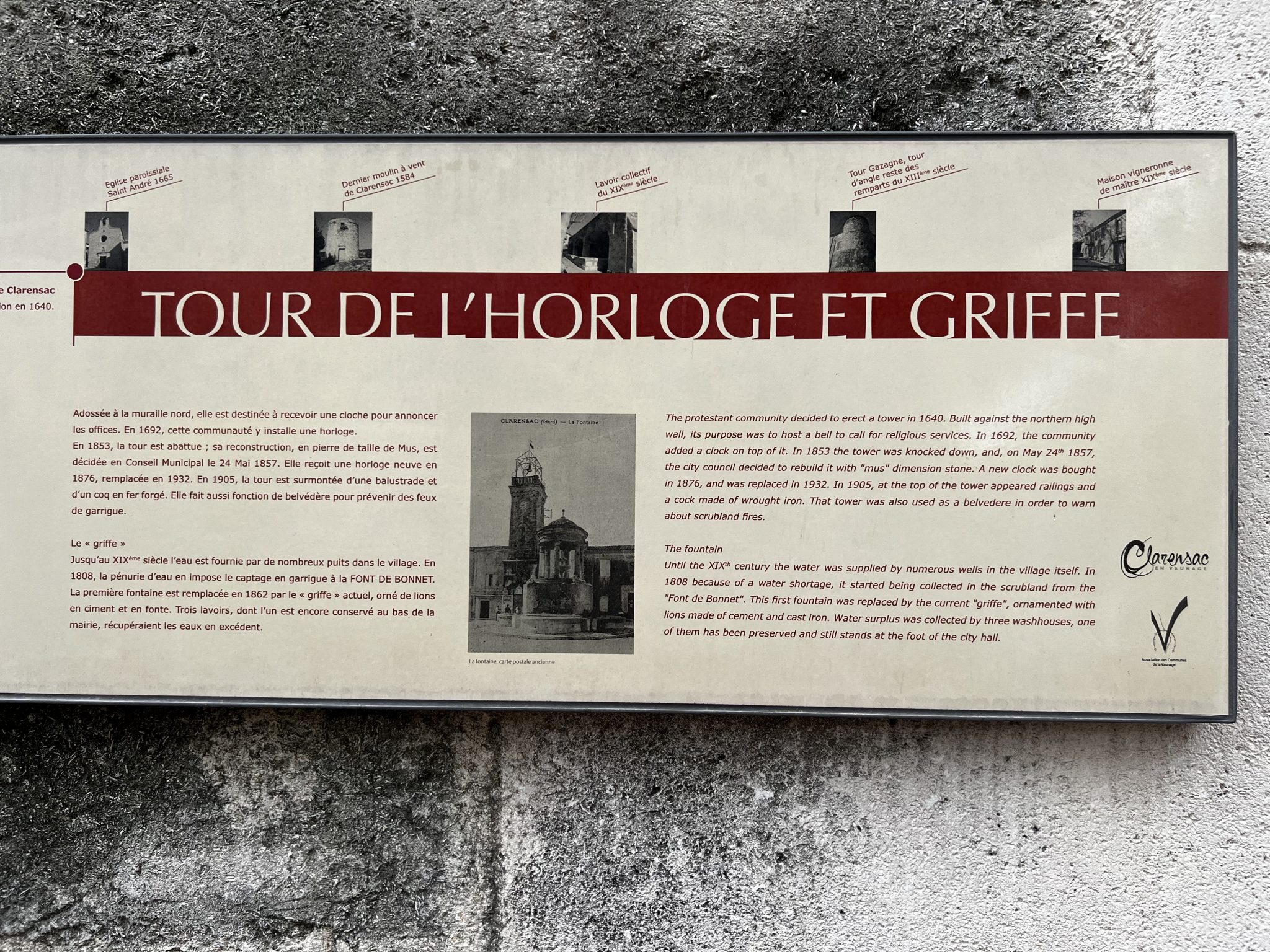
The Clock Tower
Formerly a defense and watchtower, the Tour de l'Horloge has always been a focal point of the village.
La Fontaine du Griffe
The Fontaine du Griffe is a must-see site in Clarensac.
Towers and Ramparts
The ancient medieval ramparts and towers bear witness to Clarensac's fortified past. Take a stroll through the streets of the old village to discover these historic remains.
The Clarensac Coast
The highest point in the Vaunage region, the Côte de Clarensac offers magnificent views of the coastline.
Plan your visit
Visit Clarensac to explore its rich history and unique heritage. Discover this charming village, its historic sites and panoramic views for an enriching experience.