

Cabrières
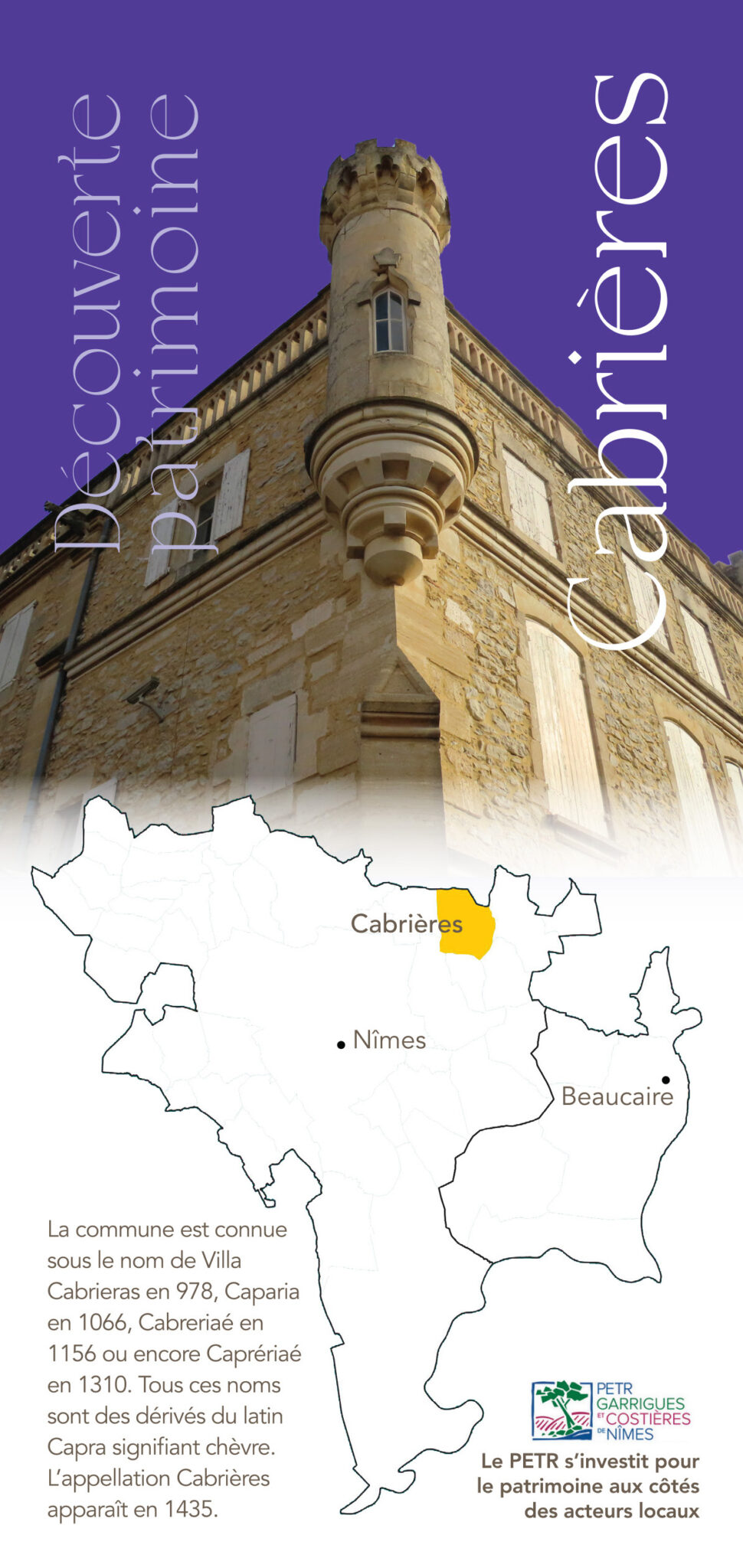
Around ten kilometers northeast of Nîmes, in the direction of Avignon, the village of Cabrières sits on the heights of the garrigues, overlooking the plain. Nestled between hills and valleys, Cabrières offers an unspoilt natural setting, ideal for nature lovers.
History of Cabrières
Cabrières has been inhabited for over 6,000 years, as evidenced by the prehistoric remains found in the Baume Bourbon cave, a site of human occupation since the Neolithic period. The village, with its strategic location near perennial springs and shelter from the Mistral wind, has attracted many civilizations. In the first century BC, Cabrières was colonized by the Romans, who established several Gallo-Roman villas, notably on the site of La Bastide.
First mentioned in 978 as Villa Cabrieras, the village officially became Cabrières in 1435. The village's name derives from the Latin "Capra", meaning goat, in reference to the herds that once grazed the area. Cabrières has also gone through troubled times, affected by the Wars of Religion in the 16th century, which led to the destruction of its ramparts in 1577. More recently, the village was briefly occupied by German troops during the Second World War, leaving its mark on the collective memory.
Heritage
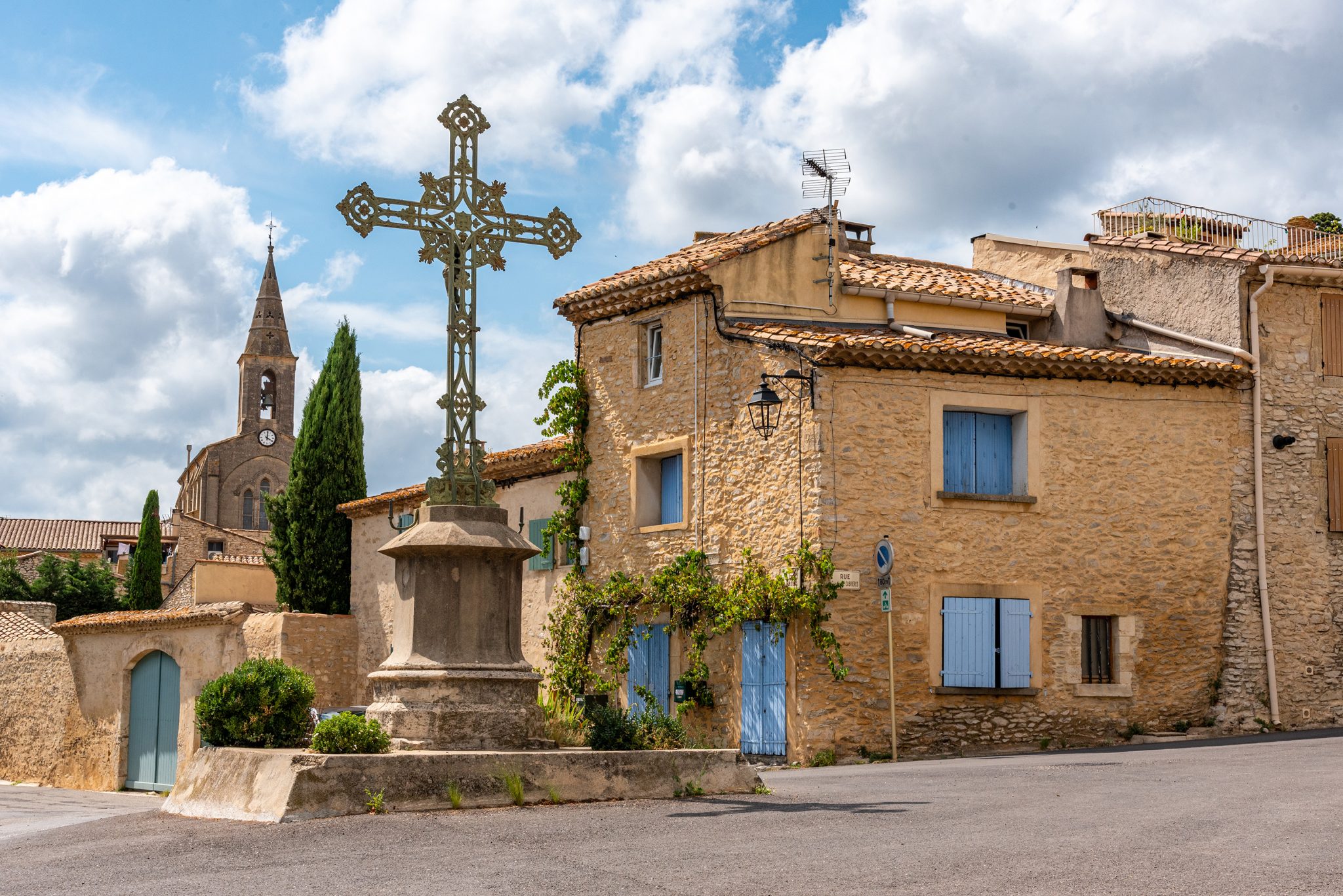
Saint Jean-Baptiste church, built in 1862 under the direction of architect M. Bègue, is a focal point of village life. Its simple, uncluttered architecture invites contemplation and reflects the authentic spirit of Cabrières.
The Château de Cabrières, with its 12th-century keep, is another remarkable vestige of the village's medieval past. The picturesque lanes lead to 17th-century stone houses with carved lintels and mullioned windows, testifying to the village's rich architectural history.
Walks in the heart of the village
Cabrières offers plenty of opportunities for exploring the surrounding area. The garrigue paths, lined with oak, olive and juniper trees, invite you to discover the surrounding nature. The viewpoint near the water tower offers an exceptional panorama of the plain and surrounding hills. Walkers can also discover local springs, such as La Bastide, whose presence has shaped the village's history.
Public spaces
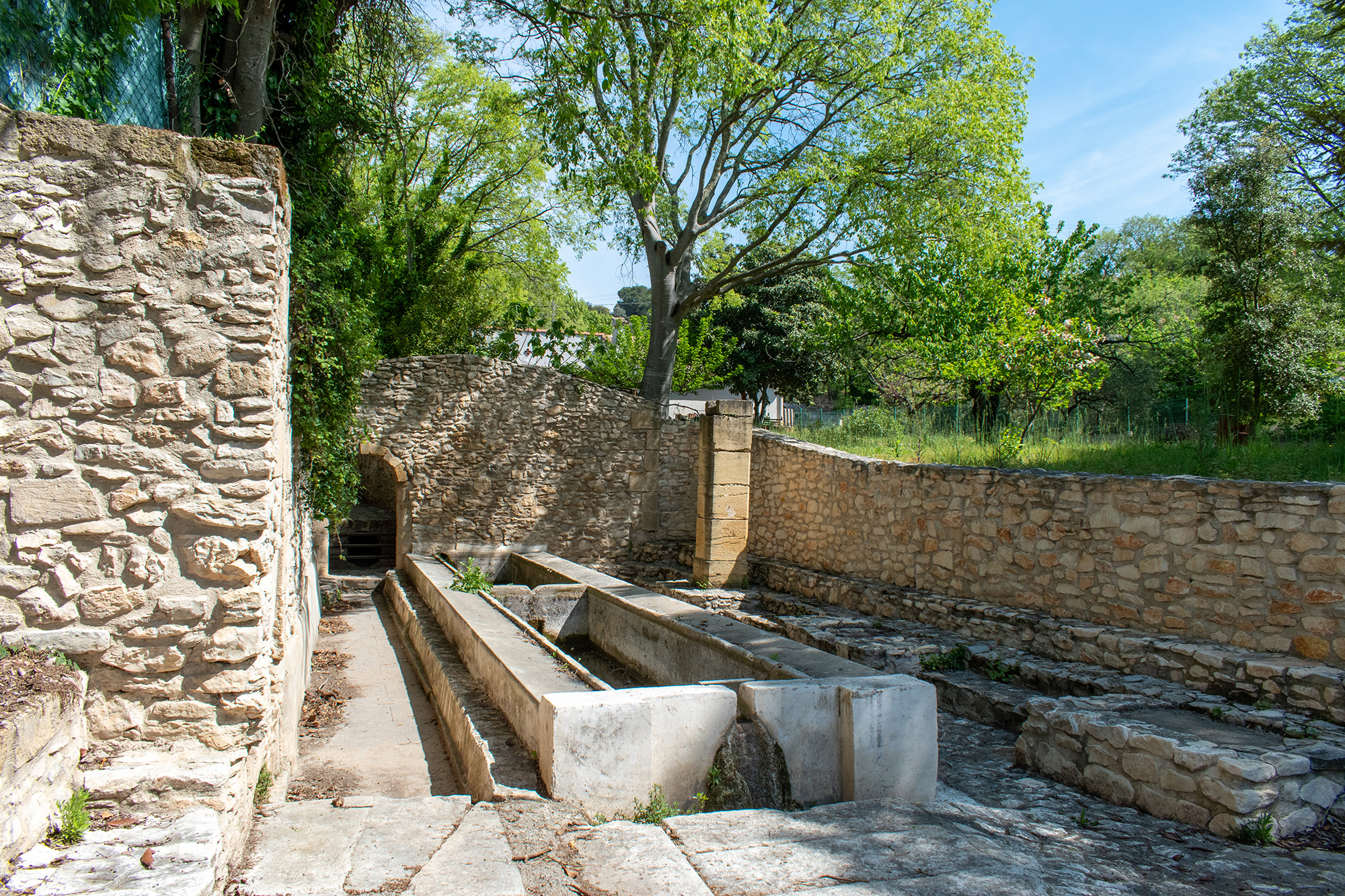
Cabrières' public spaces are ideal for relaxation. Near the old wash-house and the stream, you'll find peaceful spots to enjoy the serenity of the village. Take a stroll through the narrow streets and you'll discover historic buildings that will immerse you in the village's history.
Inaugurated in 2020, the Cabrières socio-cultural center, designed by Atelier Combas Architectes, blends harmoniously into the village landscape. Its multi-purpose hall and forecourt will host numerous festive events and community gatherings.
Rehabilitated in 2024, the windmill, perched on the heights of Cabrières, is a peaceful meeting place where events such as lunch in the meadow are held. A playground has also been set up on the site, providing an intergenerational space where young and old alike can meet up.
Plan your visit
Explore Cabrières and immerse yourself in its rich past. The village, with its natural vistas and historic heritage, offers an authentic and rejuvenating experience. In addition to its rich architectural heritage, Cabrières offers a number of convivial events every year.